My journey through animal training, academic study and the importance of staying curious.
I'm delighted to share that I've officially graduated from University Centre Bishop Burton, with a First Class BSc (Hons) in Canine Behaviour Management, awarded by the University of Hull!
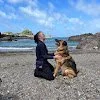
And of course, my dog Jess joined me for a graduation photo outside the beautiful Beverley Minster.
It's been quite a journey to get here, and one that actually started long before I began working professionally with dogs.
Where it all began – training sea lions!
I first started working in animal training back in 2008, training sea lions in zoos and aquariums.
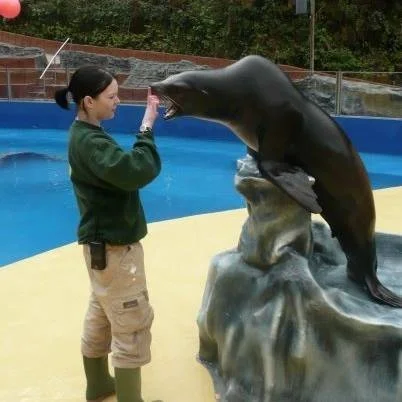
Working with one of our California Sea Lion bulls, Morgan.
Much of my early training experience was learned on the job, supported by plenty of independent reading and studying. I became fascinated by learning theory and both the science and the art of animal training. I wanted to understand not just how to train an animal, but why particular training strategies worked.
Over the years, I worked with a wide variety of species, developing practical animal training and husbandry skills alongside my understanding of behaviour.
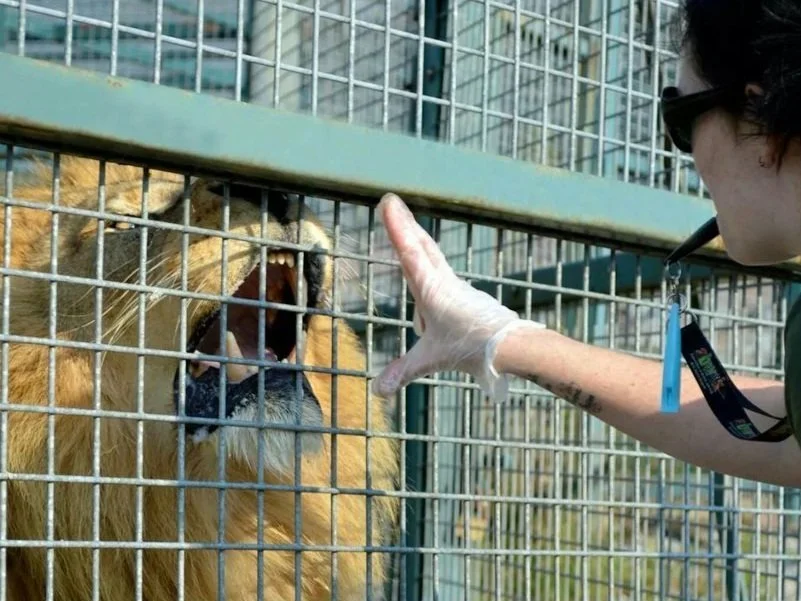
Teaching one of our Lions, Lenny to open his mouth for a dental health check.
I also completed a distance-learning diploma in Animal Behaviour, exploring the evolution of behaviour, followed by a Foundation Degree in Animal Conservation. This covered subjects including animal behaviour, ethology, anatomy and physiology, health and disease, ecology, marine conservation and practical conservation skills.
These studies gave me a much broader understanding of animals, their biology, their environments and the many factors influencing their behaviour.
Developing my practical dog training skills
When I moved into professional dog training, I wanted to ensure that my practical skills were independently assessed to a high standard.
I enrolled on the Karen Pryor Academy Dog Trainer Professional programme, an intensive nine-month course which led to becoming a Karen Pryor Academy Certified Training Partner (KPA CTP).
Logo for the Karen Pryor Academy
This was very much a hands-on course. It wasn't simply about understanding learning theory or passing written assignments. I had to demonstrate my ability to train dogs and coach their owners.
One of the final assessments involved training a dog to perform a chain of ten fluent behaviours, one after another, without additional rewards between behaviours. The examiner could then select individual behaviours from the chain and ask us to demonstrate them separately.
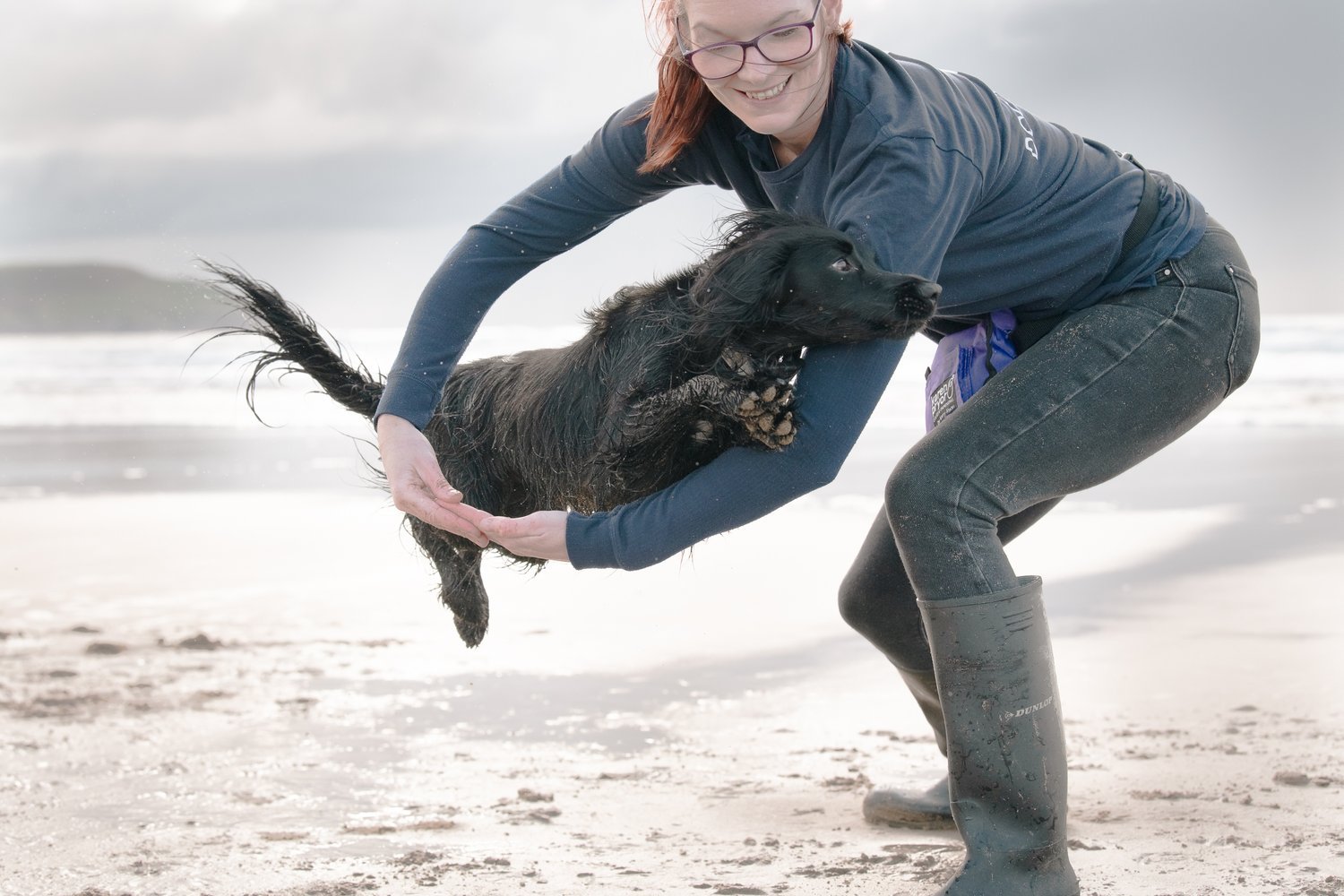
Me and my KPA partner dog, Mollie doing the hoop trick I taught her on the course.
We were also assessed on our ability to coach a group of unfamiliar dogs and their owners in a pet dog training class.
My training partner throughout the course was Molly, a wonderful working Cocker Spaniel who helped me achieve my certification!
This qualification also supported my registration as an Animal Training Instructor (ATI) with the Animal Behaviour and Training Council (ABTC).
It was a fantastic experience and really helped sharpen my training mechanics, observation skills and ability to communicate with dog owners.
But becoming a certified dog trainer certainly wasn't the end of my learning.
From dog training to behaviour consulting
As my business, Tarka Dog Training & Behaviour, developed, I began working with an increasing number of dogs exhibiting more complex behavioural difficulties.
While teaching puppies, recall, loose lead walking and other everyday skills is incredibly rewarding, I became particularly interested in understanding and assessing problematic behaviour.
Why does a dog behave differently in different environments? What is maintaining a particular behaviour? What influence might previous learning experiences, health, the environment or interactions with people have?
I completed Michael Shikashio's Master Course in Aggression, which provided further specialist learning in aggression, risk assessment, lead handling and behaviour modification strategies.
However, I wanted to develop my academic knowledge further, particularly my ability to investigate and critically evaluate the scientific research behind behaviour assessment and modification.
And that led me to my BSc in Canine Behaviour Management.
Back to university – studying canine behaviour management
In 2024 I enrolled at University Centre Bishop Burton to complete my BSc (Hons) in Canine Behaviour Management, awarded by the University of Hull.
My degree included modules in:
Advanced Learning Theory
Animal Cognition
Human Factors in Canine Behaviour Consulting
Holistic Behaviour Modification
Each module explored different aspects of canine behaviour and the many factors that need to be considered when working with dogs and their owners.
One of the things I particularly enjoyed about returning to academic study was the emphasis on scientific literature.
Rather than simply learning a particular technique or being told how to approach a behaviour problem, we were encouraged to investigate the evidence, explore different perspectives and critically evaluate research.
Our assessments included academic essays, presentations, website development and an independent research project, all requiring us to engage with and reference scientific literature.
It was challenging at times, particularly alongside running my business and family life, but I genuinely enjoyed the process. All the Lecturers and the learning support team at UCBB were fantastic at guiding students through each assignment.

Me and my dog Jess at Beverley Minster after thegraduation ceremony for the UCBB (University center Bishop Burton College.
My dissertation – helping dogs who struggle with grooming
For my final research project, I chose to investigate problematic behaviour during professional dog grooming.
My research explored how professional dog groomers evaluated a brief educational webinar introducing a constructional handling strategy for dogs who avoid grooming procedures.
The strategy focused on shaping cooperative stillness, considering the function of avoidance behaviour and how changes to handling procedures and reinforcement contingencies might help dogs participate more comfortably.
I was interested in whether a short microlearning resource could provide accessible continuing professional development (CPD) for busy groomers.
I thoroughly enjoyed developing the project, creating the educational material, collecting data and analysing the results.
One of the most interesting parts was conducting the literature review. It highlighted just how limited the published research is in some areas of problematic behaviour during professional dog grooming.
There is still so much to investigate, and I would love to see more research into practical, evidence-informed strategies that improve both animal welfare and the working experience of grooming professionals.
My biggest takeaway? Critical evaluation!
If there is one thing that my academic studies have reinforced, it is the importance of thinking critically and staying curious.
A published scientific paper doesn't automatically provide a definitive answer. Neither does a popular training method, a well-known professional's opinion or an anecdotal success story.
We need to ask questions.
What does the evidence actually demonstrate? How was the research conducted? What are its limitations? Can the findings reasonably be applied to the dog and circumstances in front of us? Are there alternative explanations?
And perhaps most importantly, are we willing to change our minds when new evidence challenges what we thought we knew?
I think this is particularly important in dog training and behaviour, where there are so many different approaches, theories and strongly held opinions.
Every dog has an individual learning history and lives within a unique environment. Understanding behaviour requires curiosity, careful observation, appropriate assessment and a willingness to keep learning and work with the dog in front of you!
A degree doesn't suddenly make someone a competent behaviourist, just as years of practical experience don't automatically guarantee a sound understanding of the science.
For me, combining practical, independently assessed animal training skills with formal academic study has been incredibly valuable.
They complement each other.
Thinking about becoming a dog trainer or behaviourist?
One thing I've learned along the way is that choosing professional education in dog training and behaviour can be a bit of a minefield!
There are so many courses, certifications, qualifications and organisations available, and it isn't always easy to know where to begin.
My advice would be to think about what you actually want to do.
Do you want to teach pet dog training classes? Become involved in dog sports? Teach practical skills and cooperative care? Or are you interested in working with more complex behavioural cases?
Your goals will help determine the most appropriate learning pathway.
When considering a course, I would encourage aspiring trainers to ask:
Does the course include practical training and assessment of my skills?
Is the teaching informed by scientific evidence and ethical animal training principles?
Will I learn to understand behaviour and learning processes, rather than simply follow prescribed techniques?
Am I encouraged to question, investigate and critically evaluate the information presented?
What qualifications, experience and professional recognition will the course provide?
Organisations and education providers worth exploring include the Karen Pryor Academy (KPA), Professional Association of Canine Trainers (PACT), Institute of Modern Dog Trainers (IMDT), Institute of Canine Psychology (ICP), Association of Pet Behaviour Counsellors (APBC) and Animal Behaviour and Training Council (ABTC).
University Centre Bishop Burton also offers higher education pathways in animal behaviour and training.
Different organisations offer different types of education, assessment and professional recognition, so it's worth researching which pathway best suits your goals.
And if you're just starting out, you don't necessarily need to enrol on an expensive course straight away.
Get involved in ethical, reward-based dog training classes, explore local dog clubs, try different dog sports and activities, and gain experience working with different dogs and people.
There are so many wonderful disciplines to explore, from scentwork and agility to cooperative care, tricks, obedience and much more.
Practical experience, good mentorship, independent study and formal education can all contribute to becoming a skilled professional.
There isn't just one route into animal training.
What comes next?
Graduating with First Class Honours is something I'm incredibly proud of, but my learning certainly isn't finished!
I'm considering further postgraduate study, potentially an MSc in Applied Animal Behaviour and Training or Clinical Animal Behaviour, alongside working towards becoming a Certified Clinical Animal Behaviourist (CCAB).
I'm particularly interested in strengthening collaborative relationships with veterinary professionals.
Physical health, pain, welfare and behaviour are often closely interconnected. Good behaviour support requires recognising these relationships and working within our professional competencies, with veterinary involvement where appropriate.
Professional clinical behaviour certification is also an important step towards meeting recognised standards for veterinary-referred behaviour work, including cases where owners may wish to claim through pet insurance.
For now, though, I'm enjoying celebrating this milestone.
From training sea lions in 2008, through practical dog training certifications, specialist professional development and now a First Class Honours degree, it's been a fascinating journey.
I'm proud of the balance of practical experience and academic learning I've developed, and I'm looking forward to putting that knowledge to continued good use helping dogs and their people.
And if you're thinking about following a career in animal training or behaviour, I'd encourage you to pursue it. Explore different opportunities, find good teachers, practise your skills, question what you're taught and never stop learning.
Stay curious. There's always more to learn.
Zara – Tarka Dog Training & Behaviour
BSc (Hons) Canine Behaviour Management (First Class), KPA CTP, ABTC-ATI