Instinct vs Learning: Why Understanding the Difference Matters for Your Dog
Many dog owners have been told that certain behaviours are "just instinct" while others are "learned."
You may have heard things like:
"He's chasing because he's a terrier."
"She's barking because she learned it works."
"You can't train that out because it's instinctive."
But the reality is much more interesting.
Modern behavioural science suggests that instinct and learning are not separate systems competing with each other. Instead, they work together to shape the behaviour we see every day.
Understanding this can help owners set realistic expectations, improve training outcomes and better support their dog's welfare.
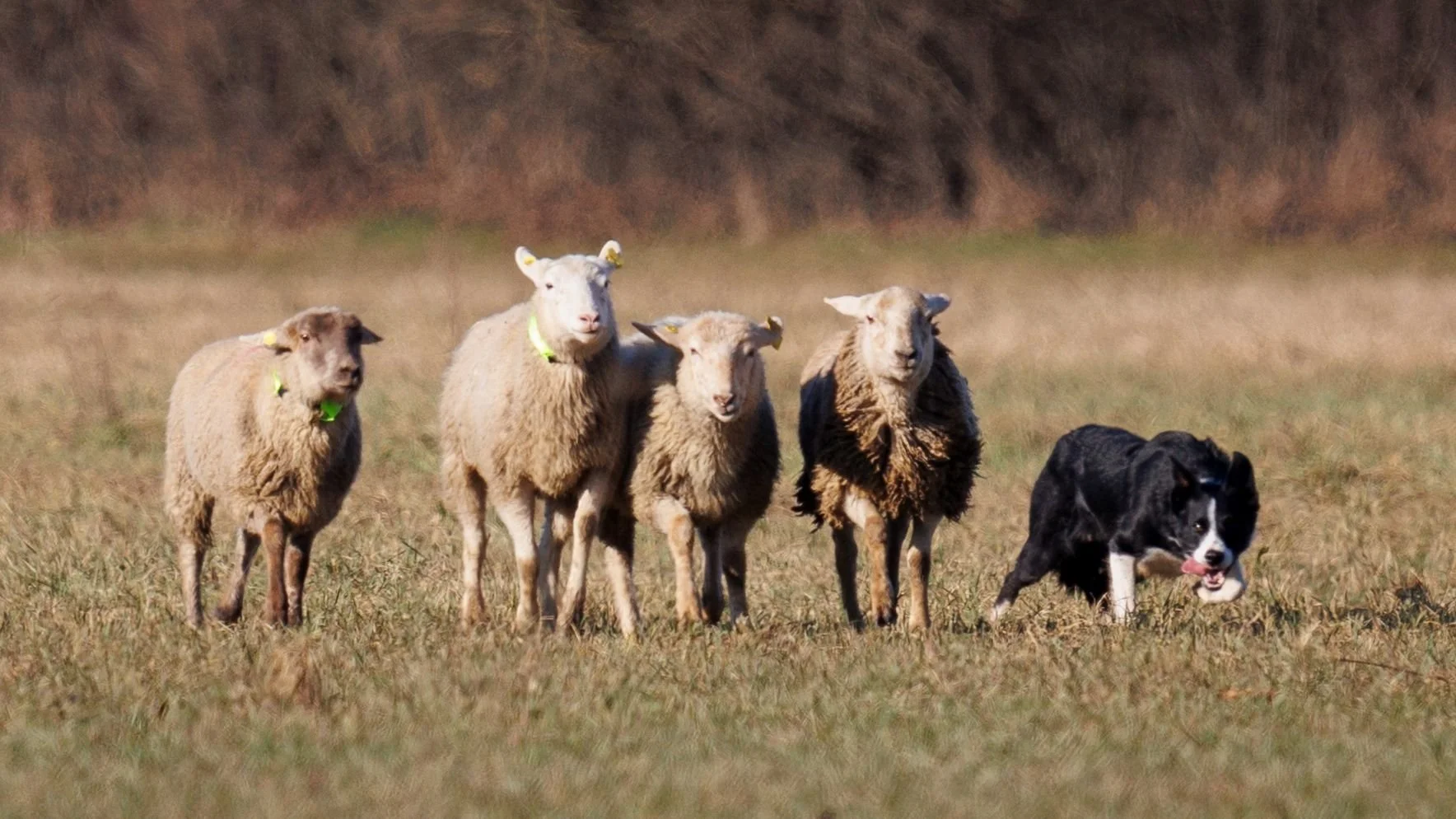
What Is an Innate Behaviour?
Innate behaviours are behaviours animals are born prepared to perform. They develop through the evolutionary history of the species rather than through individual learning experiences.
Examples include:
A mother dog caring for her puppies.
Puppies seeking warmth and milk.
Startle responses to sudden noises.
Predatory behaviours such as stalking and chasing.
These behaviours provide immediate survival advantages and often emerge without specific training or experience.
Early animal behaviour researchers described some of these behaviours as "fixed action patterns" (Lorenz, 1958; Tinbergen, 1989). However, modern research suggests that even instinctive behaviours are often more flexible than originally thought (Schleidt, 1974).
What Is a Learned Behaviour?
Learned behaviours develop through an animal's experiences.
Dogs learn constantly from the consequences of their actions and from the events occurring around them.
For example:
A dog learns that sitting earns attention.
A dog learns that barking causes visitors to leave.
A dog learns that the sound of the treat cupboard predicts food.
Learning allows animals to adapt to their environment and respond to new situations throughout their lives (Skinner, 1938; Pavlov, 1930).
This flexibility is one reason dogs are such successful companions.

BF Skinner
The Problem with "It's Just Instinct"
One of the biggest myths in dog training is that instinctive behaviours cannot be modified.
Research suggests this isn't true.
Innate behaviours can be influenced by learning, and learning itself is influenced by biology.
A dog may have a strong genetic predisposition to chase moving objects, but their experiences determine when, where and how often that behaviour occurs.
Similarly, a dog may be genetically predisposed to pay attention to human social cues, but they still learn how to respond appropriately through experience.
Rather than asking whether a behaviour is instinctive or learned, a better question is:
How much of this behaviour is influenced by genetics, and how much is influenced by learning?
Dogs Are Not Blank Slates
Psychologist Martin Seligman proposed that animals are biologically prepared to learn some things more easily than others (Seligman, 1970).
This concept is known as genetic preparedness.
In simple terms, evolution has shaped animals to pay attention to information that is important for survival.
For dogs this might include:
Movement
Social signals
Scent information
Potential threats
Research has shown that dogs are particularly responsive to visual and olfactory information that would have been important throughout their evolutionary history (Prichard et al., 2018).
This means some behaviours are easier to teach than others because they align with the dog's natural tendencies.
Why Some Behaviours Are So Difficult to Change
Many owners become frustrated when behaviours such as chasing, scent tracking or barking seem resistant to training.
The reason is often not stubbornness.
Some behaviours have two powerful influences working together:
Biological predispositions.
A long history of reinforcement.
Take chasing as an example.
Dogs possess a predatory motor pattern that has been shaped through evolution (Coppinger and Coppinger, 2001). If chasing has also been repeatedly reinforced because the dog finds it enjoyable, the behaviour becomes even more persistent.
In these cases, behaviour change is not impossible, but it may require more management, more training and more realistic expectations.
Breed Differences Matter
Not all dogs are equally prepared for the same behaviours.
Research increasingly demonstrates that breed groups differ in behavioural tendencies, cognition and learning characteristics (Junttila et al., 2022; Azadian and Protopopova, 2024).
This helps explain why:
A Border Collie may readily notice movement.
A Beagle may prioritise scent information.
A Labrador may show strong social motivation.
A Terrier may be highly motivated by opportunities to chase.
Understanding breed tendencies can help owners work with their dog's natural strengths rather than constantly fighting against them.
Dogs Are Specially Adapted to Live With Humans
One fascinating example of preparedness is dogs' ability to respond to human communication.
Studies show that dogs often follow human pointing and gaze cues more readily than wolves, even when wolves have been hand-reared by humans (Miklósi et al., 2003; Gácsi et al., 2009).
Thousands of years of domestication appear to have shaped dogs to pay attention to us in ways that other species do not.
This helps explain why dogs are so successful at living alongside humans and why social interaction can be such a powerful reinforcer during training.
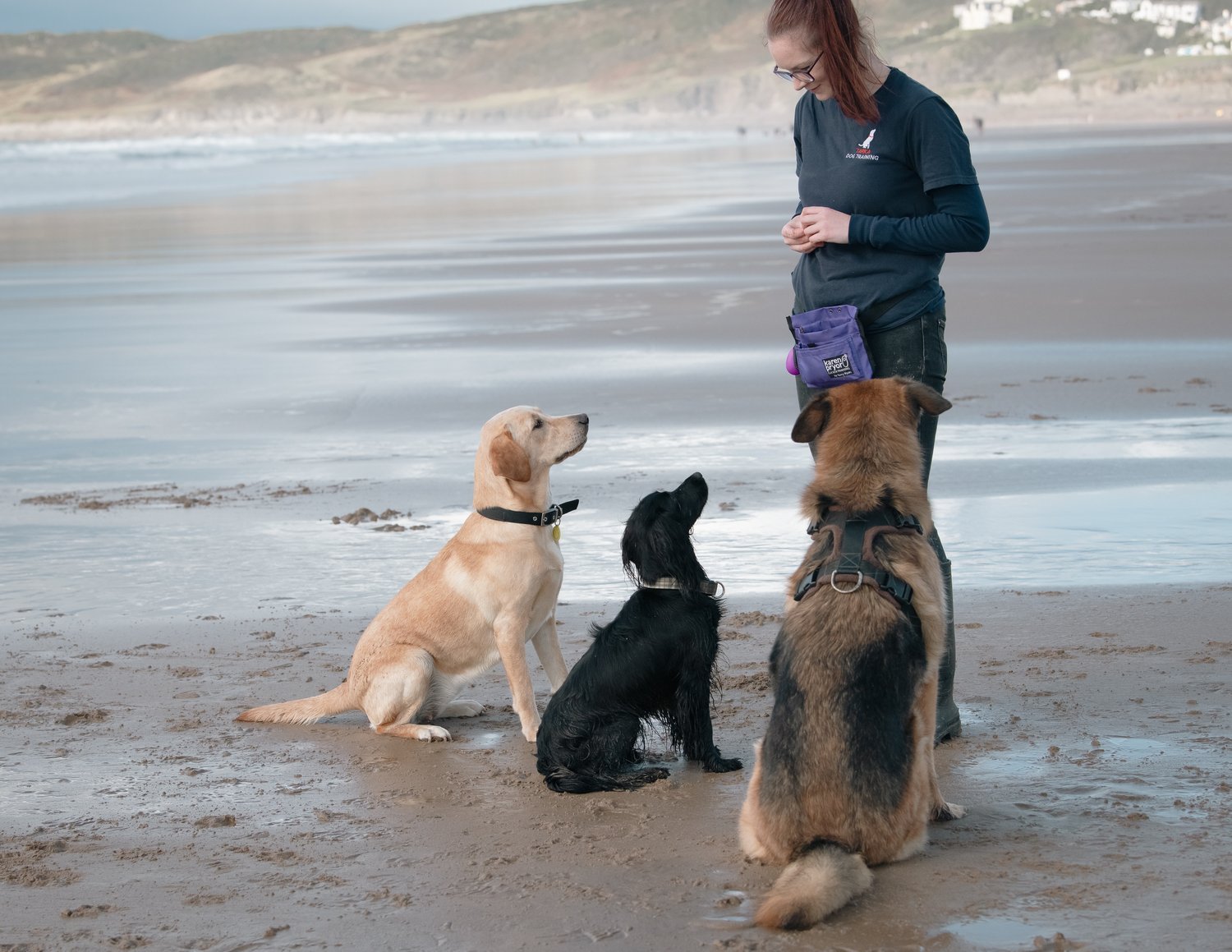
Dog training on Woolacombe beach
What Does This Mean for Dog Training?
Understanding the interaction between instinct and learning can improve both training outcomes and welfare.
Instead of asking:
"How do I stop my dog doing this?"
It is often more useful to ask:
"Why is this behaviour valuable to my dog?"
A behaviour may be maintained because:
It is naturally rewarding.
It has been reinforced repeatedly.
It serves an important biological function.
Or all three.
Effective training works with these motivations rather than ignoring them.
When training plans acknowledge natural canine behaviour, owners often see faster progress, less frustration and better long-term results.
Final Thoughts
The distinction between instinct and learning is useful, but real behaviour is rarely entirely one or the other.
Dogs are shaped by both their evolutionary history and their individual experiences.
Their behaviour reflects thousands of years of biological adaptation combined with a lifetime of learning.
When we understand both influences, we can move away from labels such as "stubborn" or "dominant" and towards a more compassionate and scientifically informed understanding of behaviour.
And that understanding helps us become better trainers, better owners and better advocates for our dogs.