Trauma, Trails and Ten years on.
Ten years ago today, I lost my husband, Leigh, to suicide. He was 42.
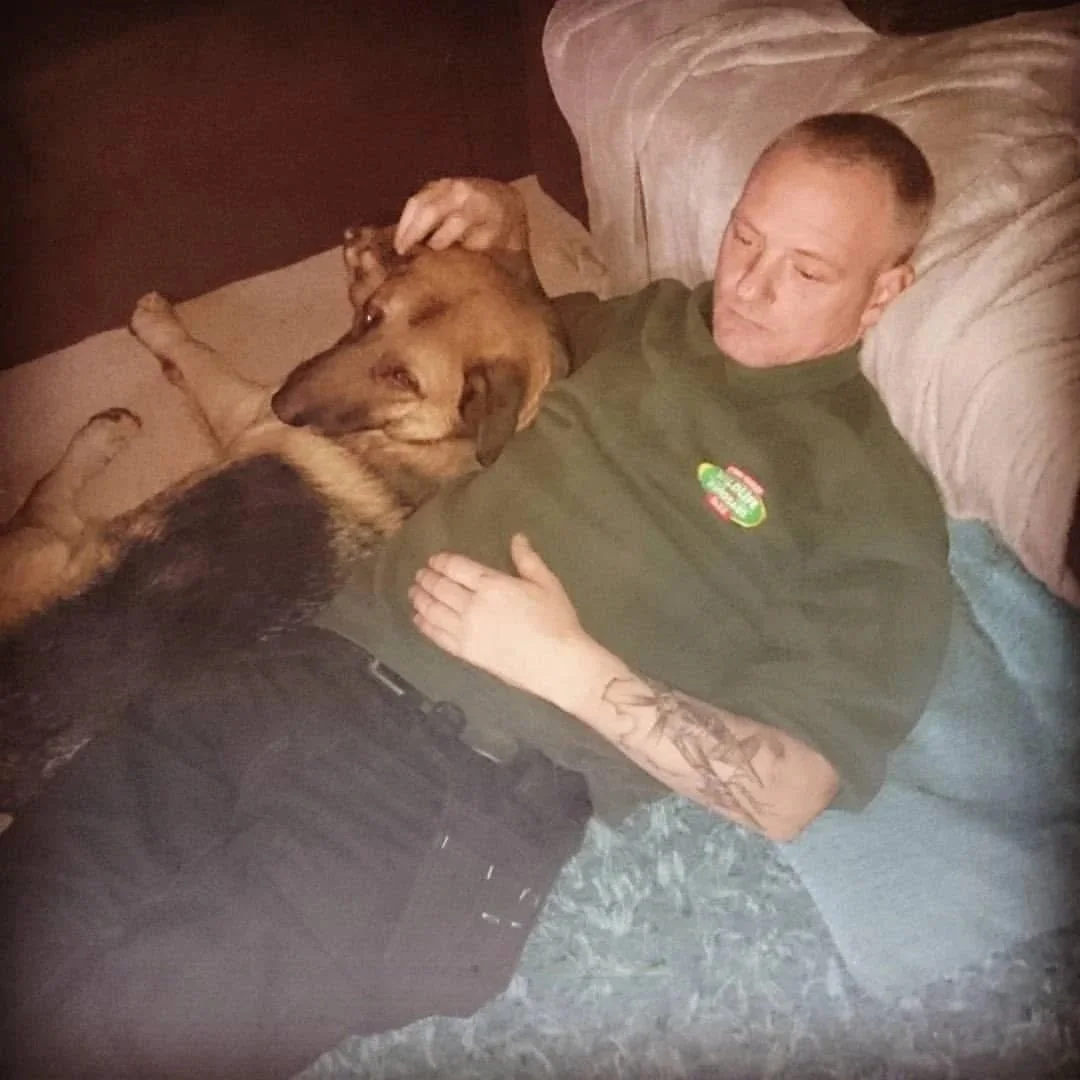
Leigh with our rescue dog, Bob.
Mental health matters deeply to me because I’ve lived through the aftermath of losing someone I loved to it.
In a strange way, that experience has shaped the dog trainer and behaviour practitioner I’ve become. Dog behaviour isn’t random. It’s influenced by genetics, learning history, previous experiences, trauma, stress and the state of the nervous system. Dogs and humans have different cognitive abilities, but many of the same brain structures and neurotransmitters influence how we respond to the world around us.
Trauma doesn’t look the same for everyone.
For a person, it might be bereavement, illness or a difficult life event. For a dog, it might be a frightening encounter with another dog, a painful medical procedure, repeated exposure to something they find overwhelming, or learning through punishment that making mistakes is unsafe.
And just as people respond differently to trauma, so do dogs.
After Leigh died, I went to therapy. I took SSRIs. I accessed bereavement support. Anyone who knew me at the time will know I was a complete mess. I gained weight through comfort eating, medication and too much wine. Drinking became a way of numbing the guilt, self-blame and grief.
Those things helped me survive, but they weren’t the whole answer.
In 2017, I signed up for the Barnstaple Half Marathon to raise money for Pete’s Dragons. I was carrying an extra two and a half stone and could barely run without shin splints, but I did it anyway. I ran it again the following year.
Running became therapy.
Fast forward to 2023 and I joined my local running club in an attempt to make friends somewhere other than the pub. Ironically, if you know Ilfracombe Running Club, you’ll know many of us still end up in the pub afterwards!
Then in 2024 I lost Bob. Not long afterwards, Jess came to stay. She never really left, and through her I discovered canicross.
For anyone who hasn’t tried it, canicross involves a dog wearing a properly fitted harness, connected to a waist belt by a bungee line. The pulling force comes through your hips rather than your arms, making it far more comfortable and balanced than running while holding a lead.
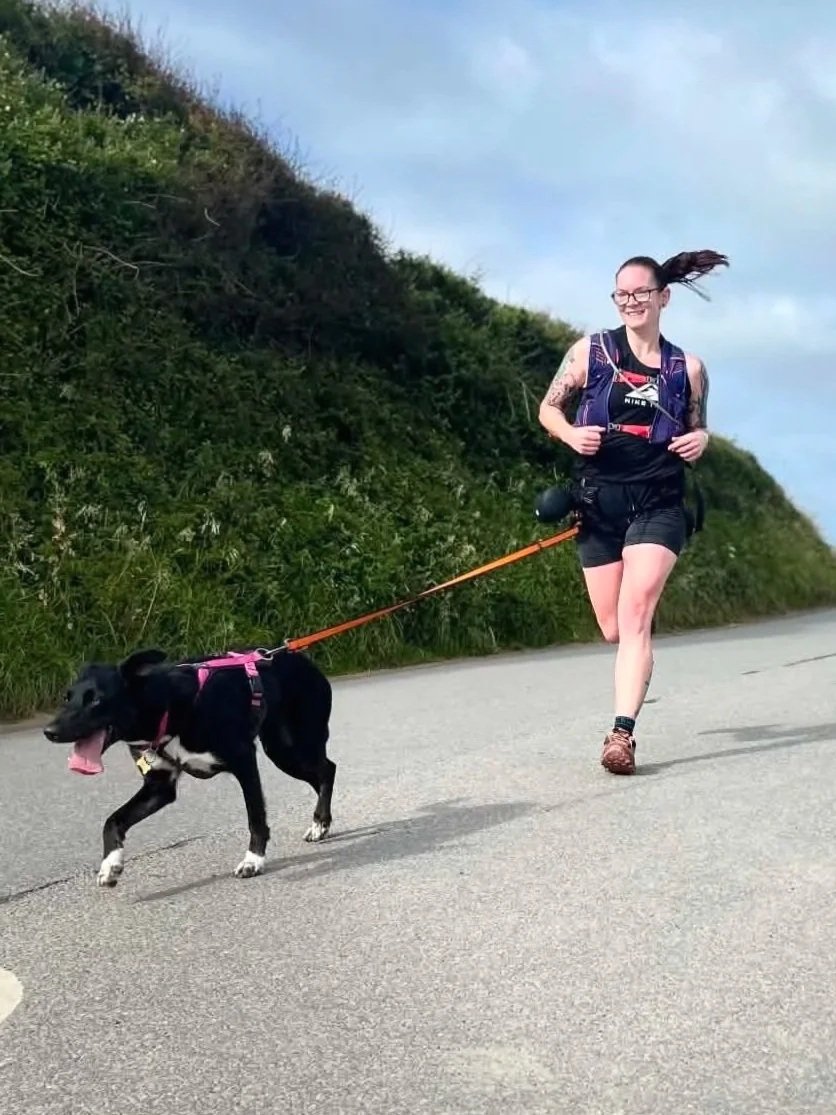
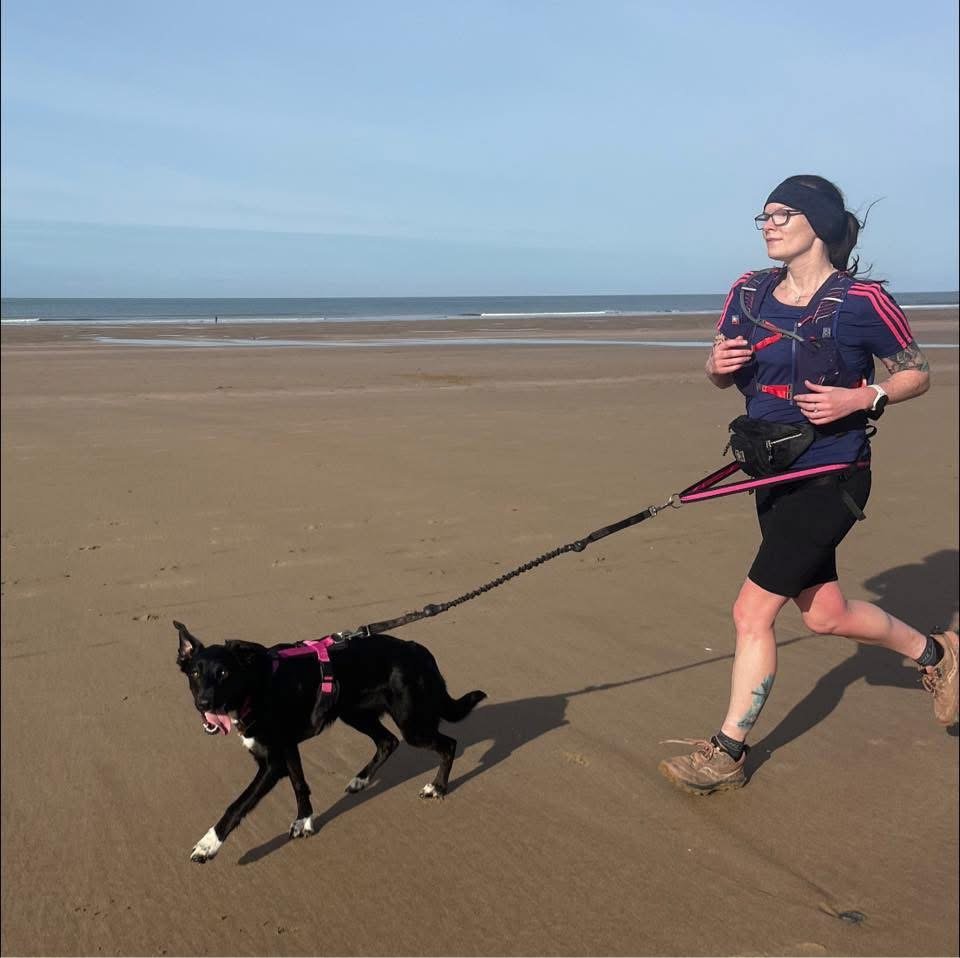
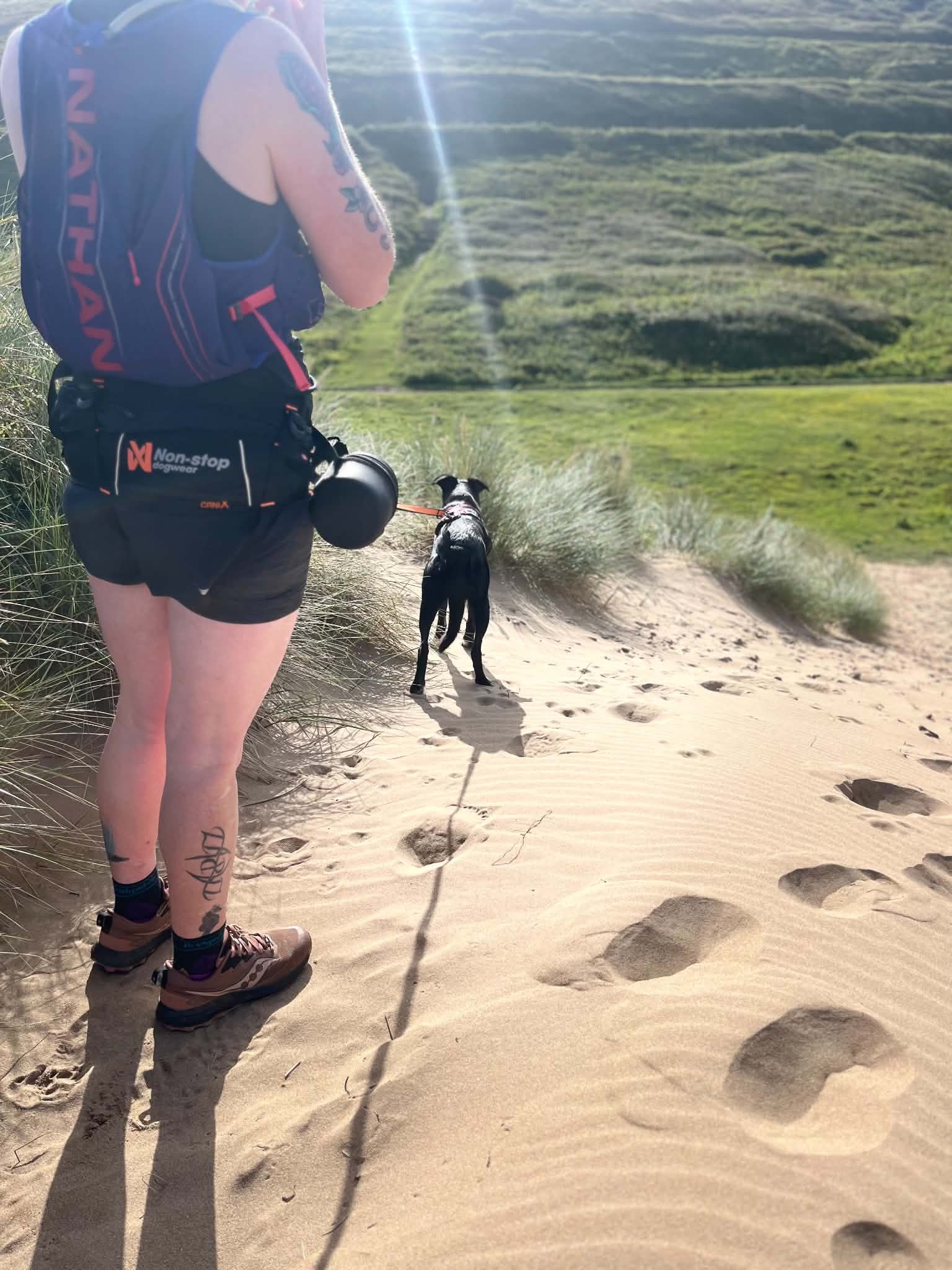
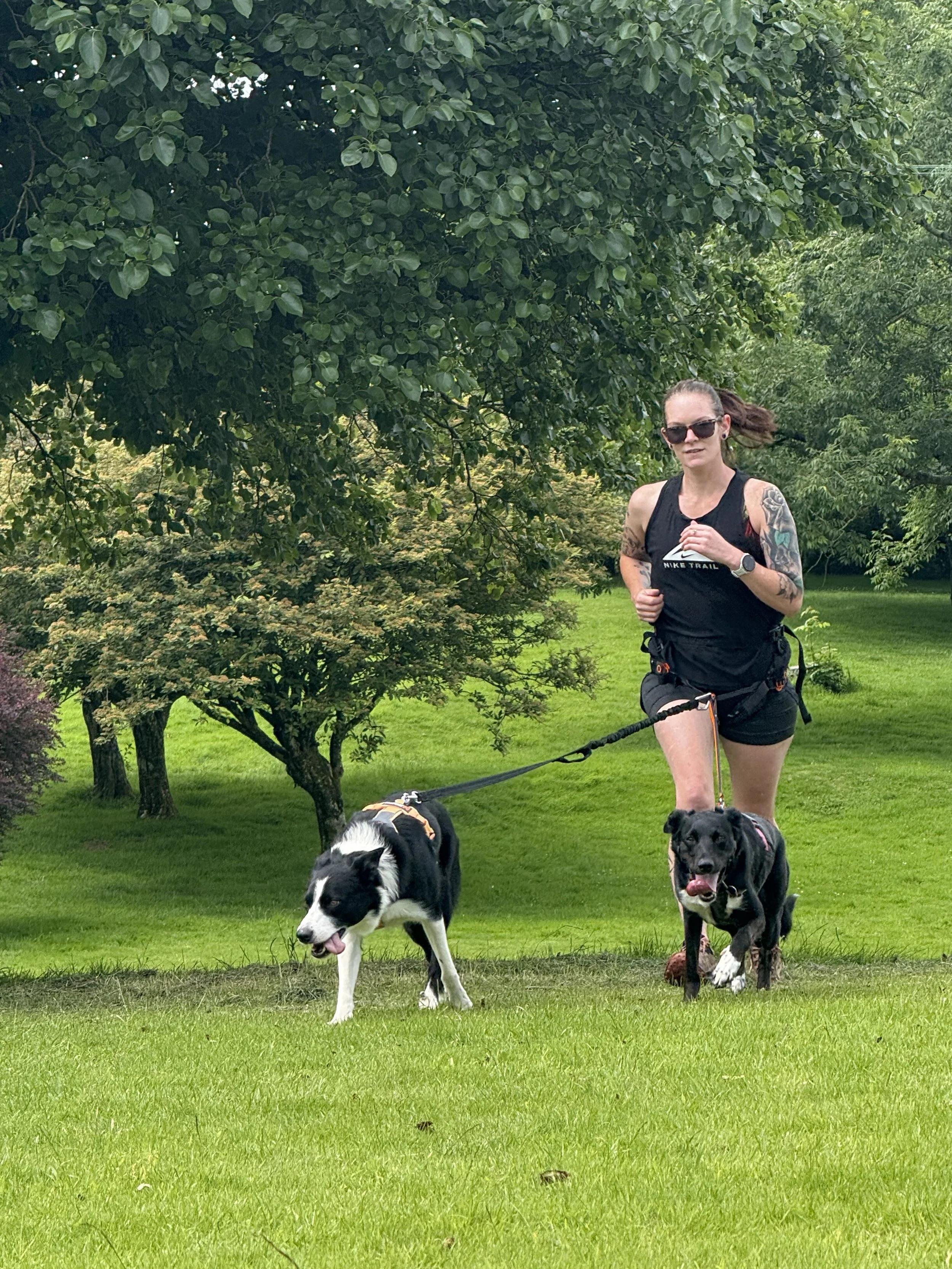
I absolutely love it.
There’s something special about moving through the world as a team. The canicross community is welcoming, supportive and full of people who simply enjoy being active with their dogs.
It also got me thinking……. We know exercise can improve human mental health. We know movement can influence mood, stress levels and overall wellbeing. So what about dogs? Particularly the reactive dogs. The nervous dogs. The dogs with big feelings.
So often I see people being told to ask those dogs for stillness around triggers. Sit. Stay. Watch me.
Sometimes that’s appropriate.
But what if movement helps?
What if jogging, hiking or running together gives some dogs a healthier outlet? What if moving with purpose helps them process their environment differently?
Bob used to jog past triggers with me. I’ve spoken to many experienced canicrossers who report similar benefits for their own reactive or nervous dogs. Dogs that struggle off lead can still experience freedom of movement. Dogs and humans can share positive experiences, new environments and physical activity together.
You don’t have to be an athlete. I’m certainly not one. I’m more of a dog jogger than a runner.
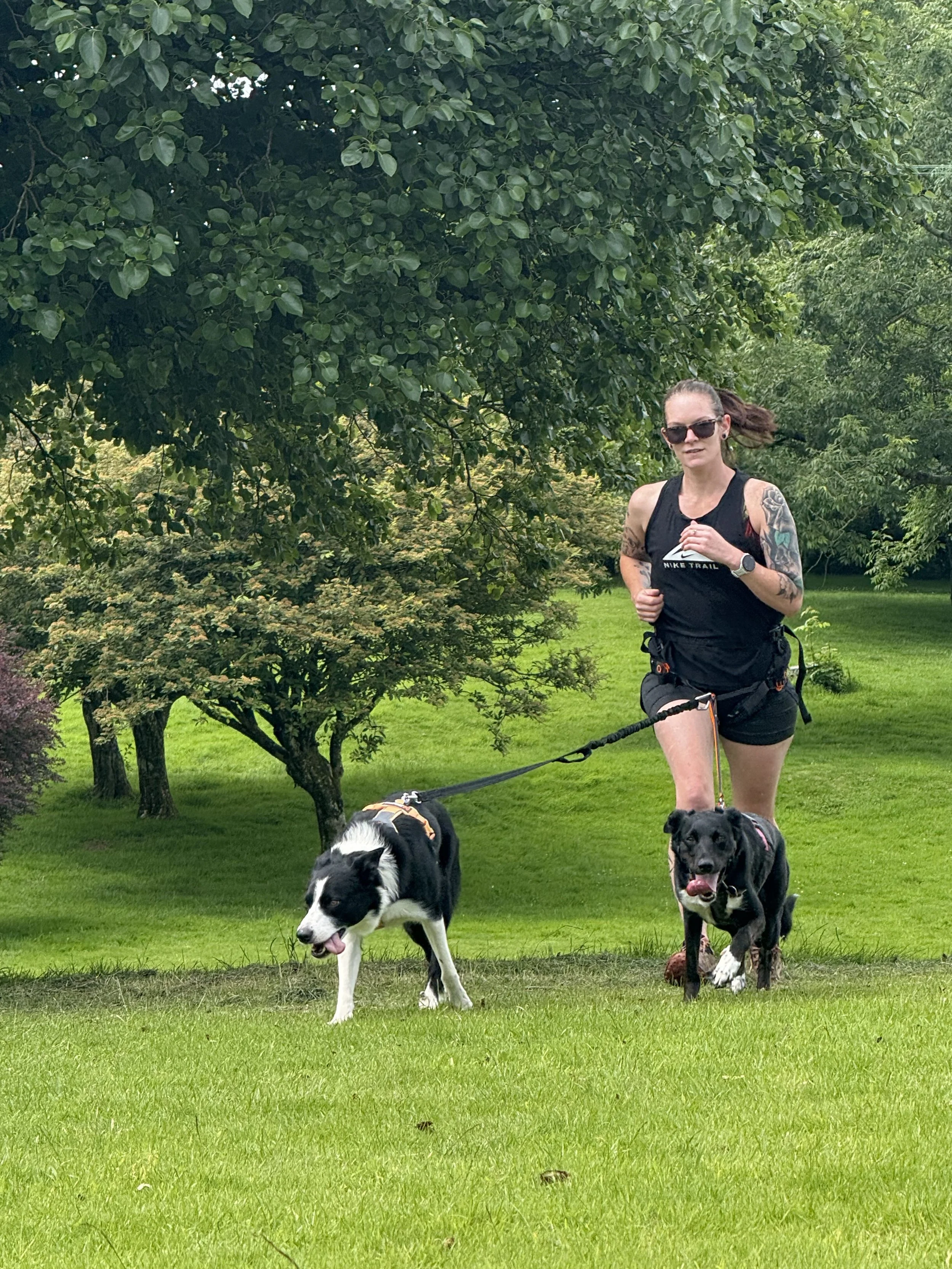
Bailey and Jess
But spending time outdoors, moving through nature with a dog, has been one of the most important parts of my own recovery.
The other thing that transformed how I view behaviour was discovering applied behaviour analysis and contingency analysis. The idea that all behaviour serves a function fascinated me. Not just in dogs, but in people too.
When I began analysing my own behaviour, I started to understand the consequences that were maintaining habits I wanted to change. Many behaviours we call “coping” are attempts to meet a need, reduce discomfort or gain relief.
Understanding the function doesn’t excuse unhealthy behaviour, but it can help us replace it with healthier alternatives.
That perspective changed how I understand dogs and people alike.
Having a reactive dog can be exhausting. Walks stop feeling relaxing. Every outing feels stressful. You feel judged by people whose dogs happened to win the genetic and environmental lottery.
Living with Bob taught me that.
It’s also why I’ll never take Jess for granted.
Canicross won’t solve every behavioural problem. Neither will running solve every mental health challenge. But movement, connection, purpose and community can be incredibly powerful.
Maybe that’s why so many people find healing through sport, cold water swimming, hiking or running. Maybe our dogs benefit from some of the same things.
Today, Jess and I are heading out to explore some trails around Barnstaple while I reflect on ten years of survival.
And while I remember Leigh.
A wonderful husband, dad, musician, biker and zookeeper who is still missed every single day.
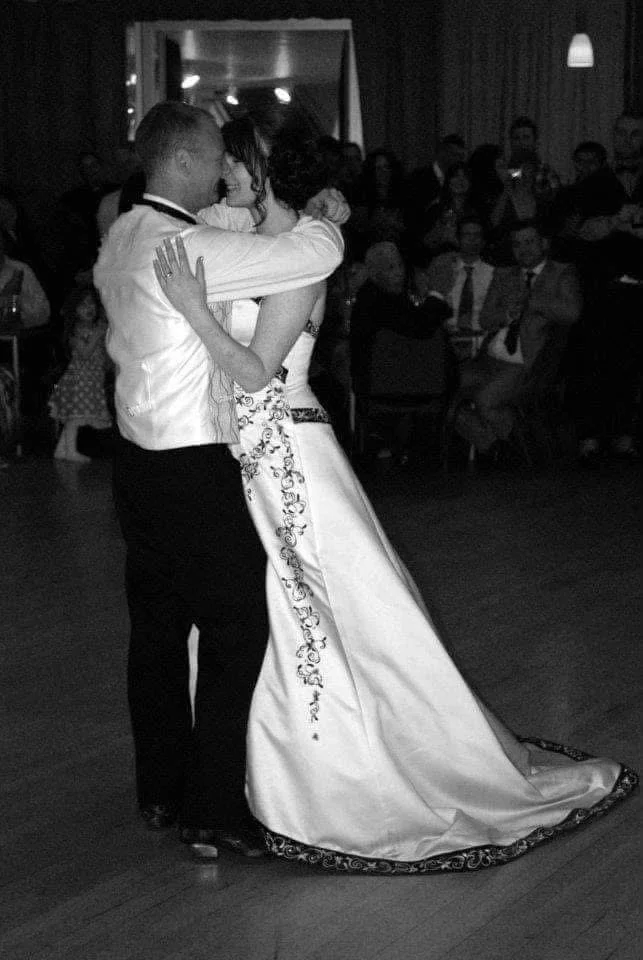
Leigh and I on our wedding day in 2021