You don't have to be a runner already, and you definitely don't need a super-fit pointer or husky to enjoy canicross!
Imagine starting your weekend with a relaxed 5 km run through beautiful North Devon, your dog trotting happily ahead, followed by a coffee, a breakfast bap and a chat with other dog lovers and runners. Or perhaps an evening trail run with a well-earned visit to the pub afterwards!
That's exactly the kind of community I'm hoping to create here in North Devon. A friendly, supportive canicross group where people and dogs can get active together, learn new skills and make friends along the way.
Whether you're already a runner, want to start running, or simply fancy trying something new with your dog, I'd love you to join us!
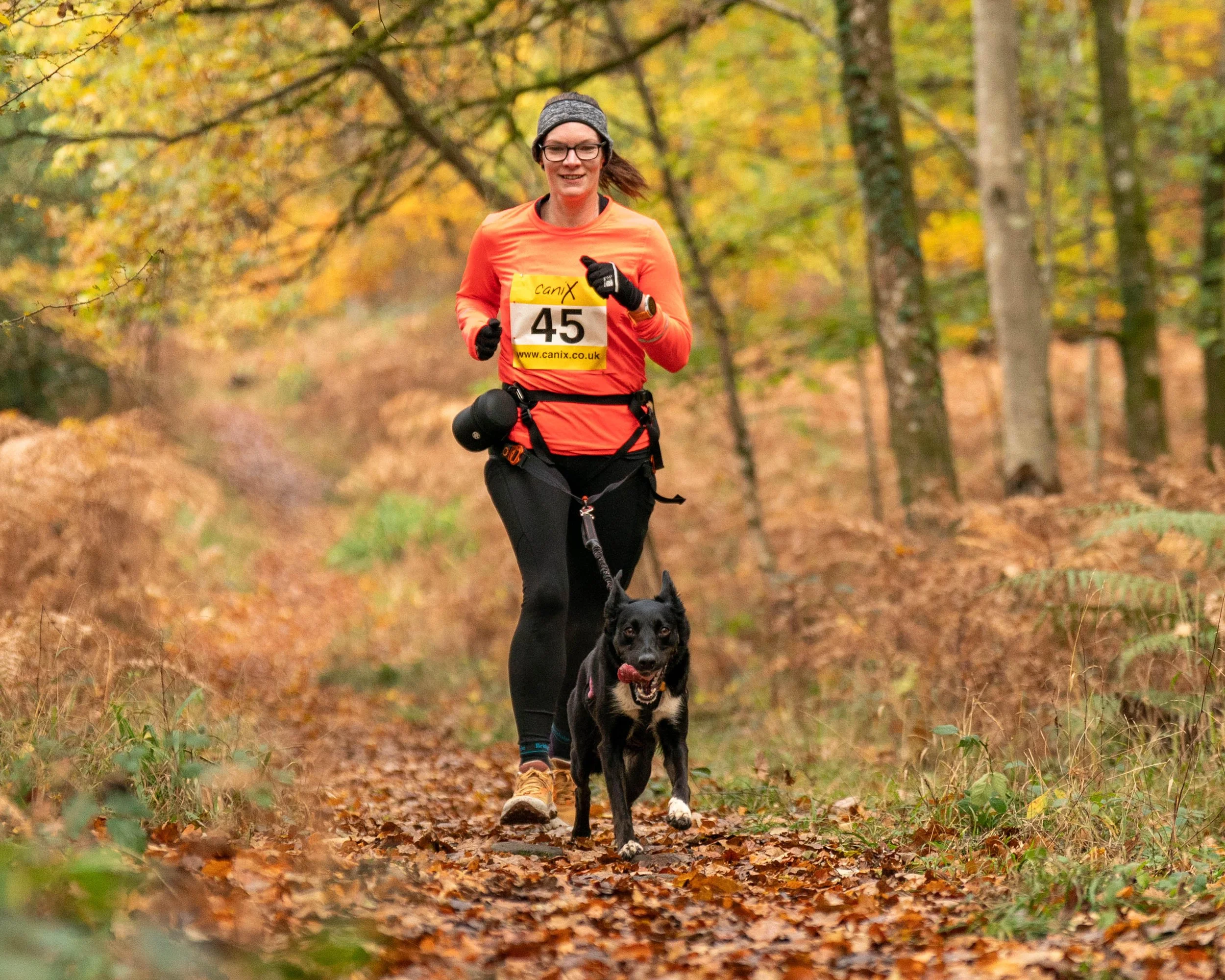
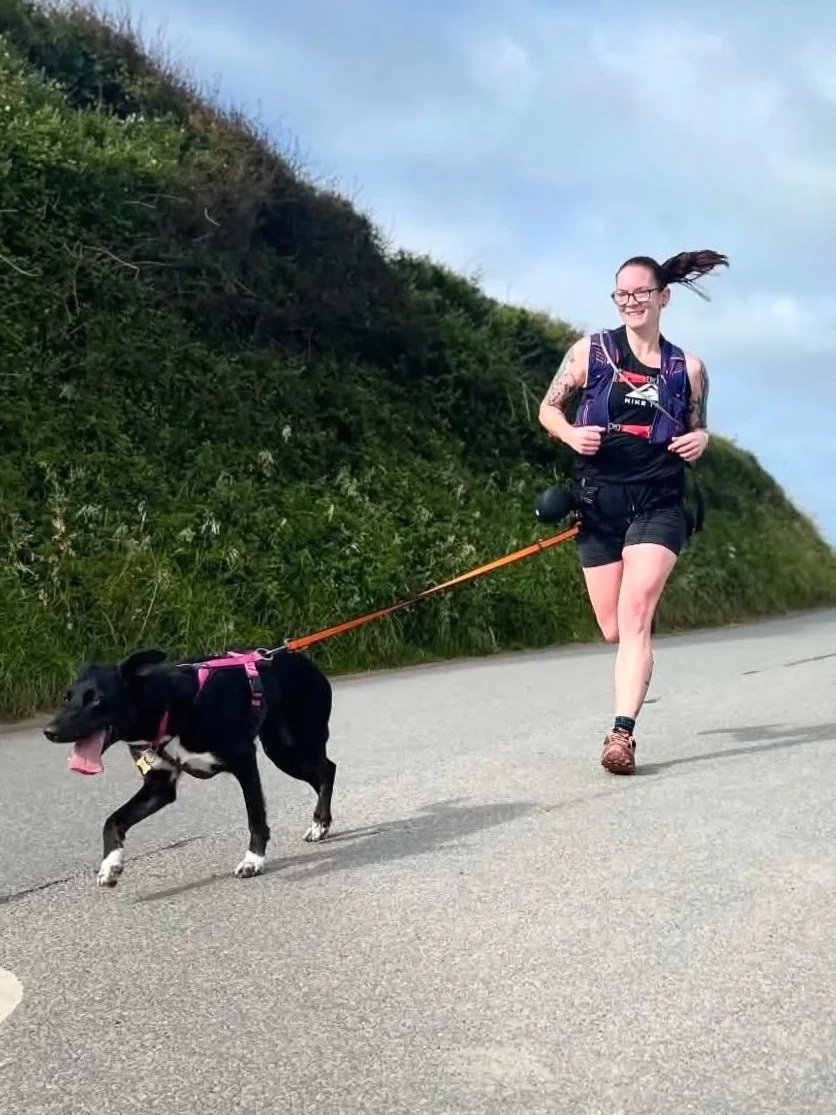
Jess and I running at a CaniX 5km event in the Forest of Dean. This was only our second event.
What is canicross?
Canicross is simply running with your dog, using specially designed equipment that allows you to run together safely and comfortably.
Originally derived from sled dog sports, canicross is now enjoyed by people with all sorts of dogs, from small terriers to collies, spaniels, Labradors and, of course, the traditional sled dog breeds and pointers.
Your dog wears a comfortable, properly fitted running harness, which connects to a bungee line attached to a running belt worn around your hips.
The human belt is designed to distribute the dog's pull through your hips and pelvis, rather than concentrating it on your lower back. Leg loops help keep the belt in position, while a sliding attachment at the front allows the line to move as your dog changes direction, reducing sideways jolts.
The bungee line also helps absorb sudden changes in tension.
Using the correct equipment is really important for the comfort and safety of both dog and human. Different dogs have different body shapes and running styles, so choosing a suitable harness and checking the fit is an important part of getting started.
It's not just a case of hooking up and keeping up!
Canicross is a skill that both you and your dog learn together.
Dogs learn directional cues such as left and right, speed cues for moving faster or slowing down, and how to continue running past distractions.
We also teach dogs how to move safely around other runners and dogs, manage their pace and respond to their human partner.
So, although it's great physical exercise, canicross also gives dogs a job to do and plenty to think about!
As a certified dog trainer, I particularly enjoy this aspect of the sport. We can teach the skills gradually, helping dogs understand what we're asking of them rather than expecting them to know what to do from the beginning.
And you don't need a dog that pulls like a train! Some dogs enjoy running out in front with a little tension on the line, while others prefer a steadier trot.
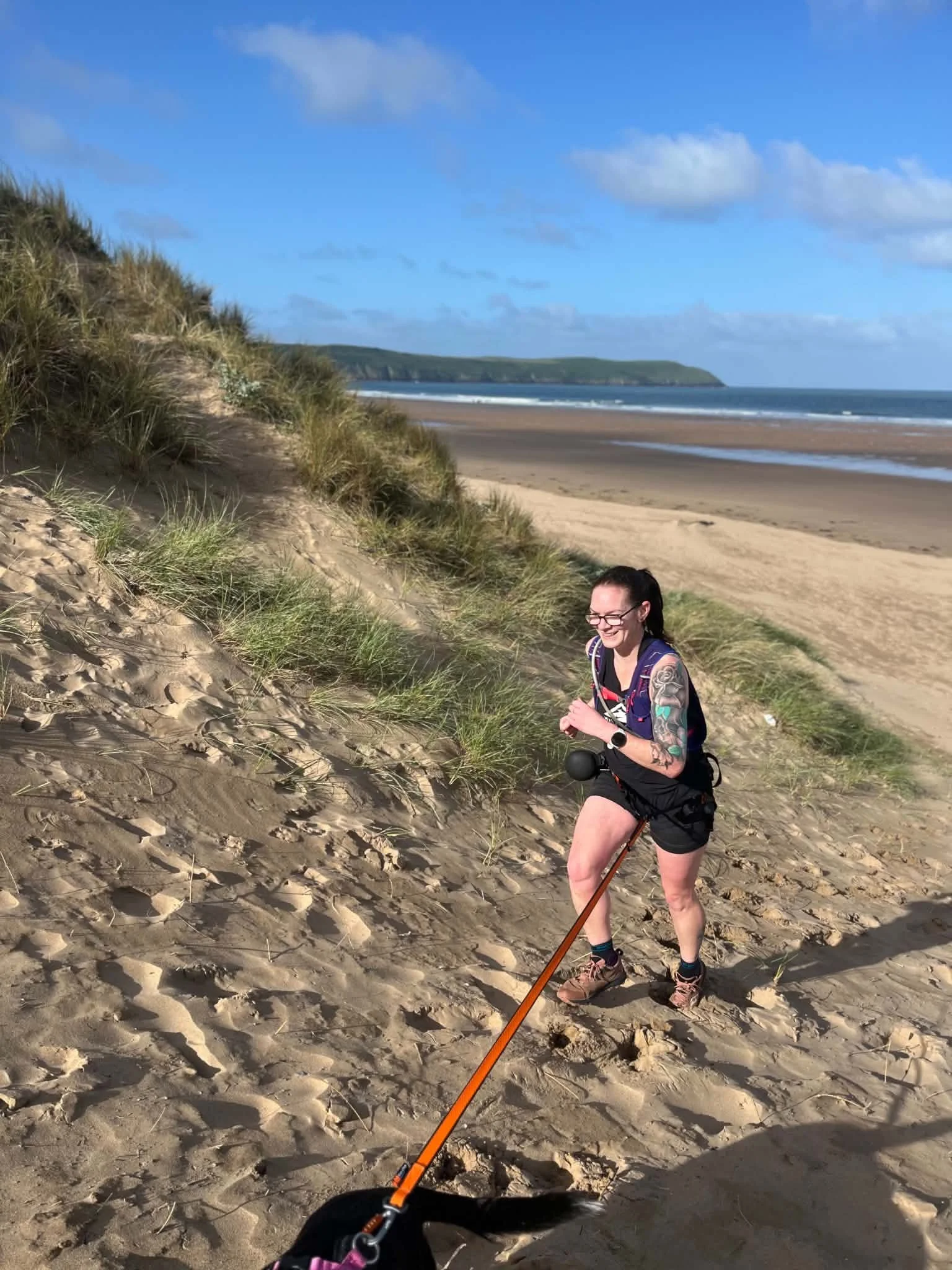
Yes, it is cheating! it can be very helpful having a dog pull you up the hills in North Devon.
Is canicross suitable for my dog?
You might be surprised by how many different dogs can enjoy canicross.
You don't need a pointer, husky or athletic working breed. Many healthy adult dogs can participate, provided the activity is appropriate for their age, physical condition and individual needs.
For organised canicross activities, I work with dogs aged 18 months and over. Some dogs may need to wait longer before starting sustained running, and dogs with existing health concerns should be assessed by their vet first.
One of the great things about canicross is that it gives dogs an opportunity to run or trot even in places where they cannot safely or legally be off lead.
But canicross doesn't replace ordinary dog walks.
Dogs still need opportunities to sniff, investigate their environment, explore and move at their own pace. Canicross is an additional activity to enjoy together, not a replacement for those important experiences.
Won't canicross teach my dog to pull on normal walks?
This is one of the most common questions people ask about canicross!
The good news is that dogs are very good at learning when different behaviours are appropriate.
We teach dogs to discriminate between their canicross equipment and their everyday walking equipment. When they're wearing their canicross harness and attached to the running belt, pulling is allowed and even encouraged! When they're wearing their normal walking harness or lead, the usual loose lead walking rules apply.
We also teach cues for moving off, speeding up, slowing down and walking, so dogs learn when to put some effort into pulling and when to take it easy.
In fact, canicross can be a fantastic outlet for dogs who naturally enjoy pulling. Rather than constantly discouraging that behaviour, we can give them an appropriate opportunity to do it!
Of course, the distinction needs to be taught consistently, rather than assuming dogs will automatically understand the difference.
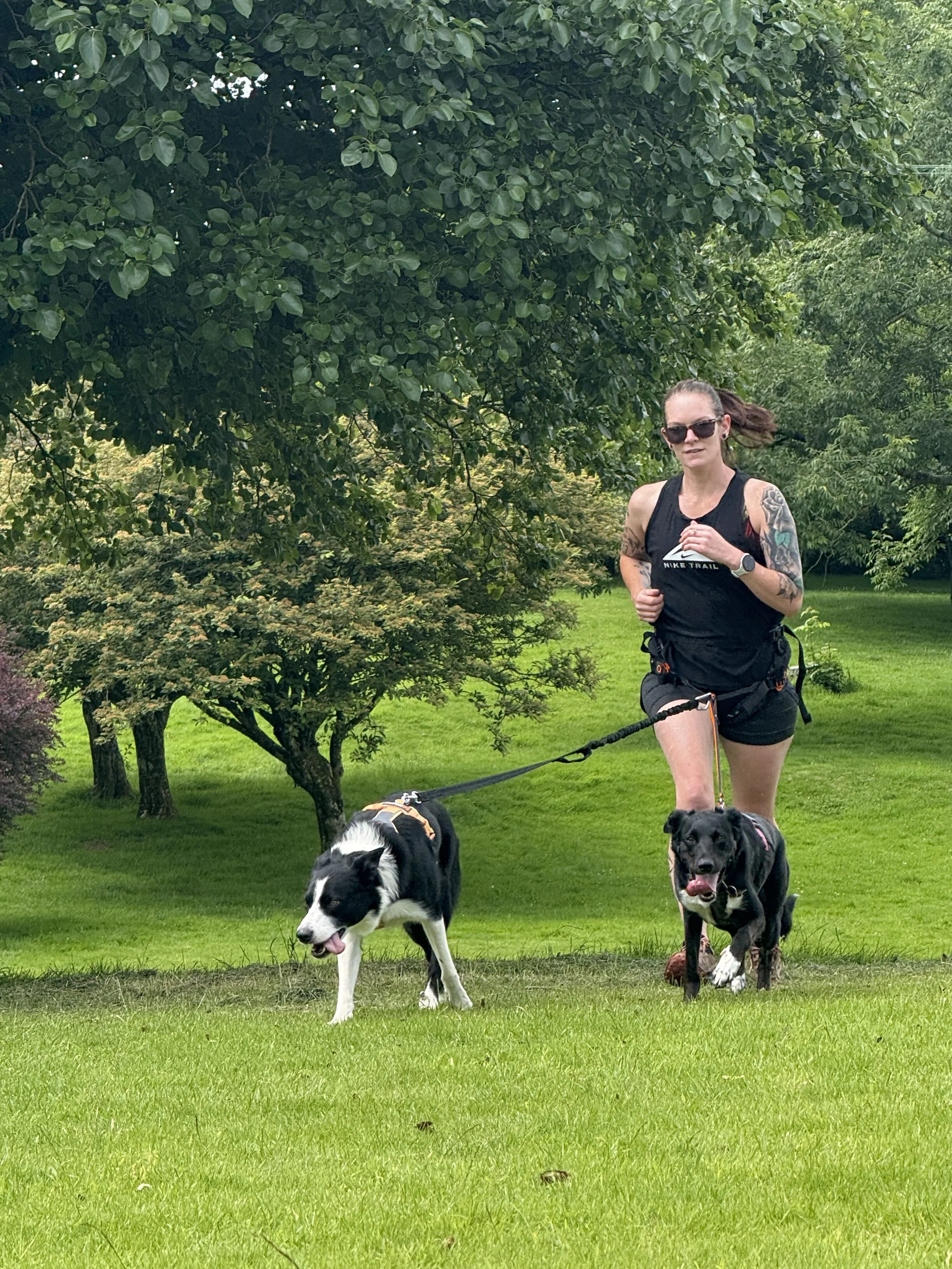
You can run with two dogs too! We got Jess’s friend Bailey involved.
What if my dog is too strong?
Don't worry, I won't be sending you hurtling down the South West Coast Path attached to an enthusiastic Labrador on your first session!
Learning to manage the pulling force of your dog is an important part of canicross, and we'll build those skills gradually.
For beginner sessions, I'll choose relatively flat, manageable routes or sometimes use a gentle uphill section, where gravity can help us keep the speed under control.
We'll practise our directional cues, slowing down, stopping and managing the line before tackling more challenging terrain.
The aim is for you to feel comfortable and confident running with your dog, not like you're being taken water-skiing across Exmoor!
What equipment do I need to start canicross?
You really don't need to spend a fortune to give it a go.
To get started, you'll need:
A healthy, physically suitable adult dog, generally at least 18 months old. Don't have your own dog? You might even be able to borrow a suitable dog, with the owner's permission!
Trail running trainers with good grip, particularly for muddy paths and uneven ground.
Comfortable running clothes, suitable for the weather.
Canicross equipment, including a properly fitted dog harness, bungee line and running belt.
And that's about it!
I have some spare canicross equipment available for people to try, so you can find out whether you and your dog enjoy it before committing to buying your own.
I started with a DogFit starter kit before eventually upgrading to Non-stop Dogwear equipment.
You can also find second-hand canicross equipment on places like Vinted, which can be a great way to save money. Just make sure the equipment is in good condition and fits correctly, particularly the dog's harness and any load-bearing attachments.
For evening or winter runs, a head torch, reflective clothing and lights for you and your dog are also useful. It's important that everyone can see where they're going and be seen by other trail users.
I always carry first aid kits for both dogs and people when I'm out running. I also use a Dicky Bag to carry dog waste on routes where there aren't many bins. Very handy when you're miles from the nearest bin and don't fancy running along swinging a poo bag!
Can I join if my dog is reactive?
Potentially, yes!
Lots of people enjoy canicross with dogs who are reactive to unfamiliar dogs or people.
Running together can provide a structured activity where dogs have a clear task, and some dogs find moving past others easier than standing still or being expected to interact.
However, canicross isn't automatically suitable for every reactive dog, and running doesn't necessarily resolve the underlying difficulties.
For group runs, dogs need to be reasonably comfortable around unfamiliar people and dogs, although that doesn't mean they need to enjoy close contact or greetings.
In fact, I'll actively discourage on-lead greetings during our group runs.
This helps everyone feel more comfortable, avoids tangled lines and allows dogs to focus on running rather than interacting with every dog they pass.
We'll be mindful of spacing, overtaking and individual dogs' needs. Some dogs may do brilliantly in a small group with a little extra distance.
As a qualified dog trainer and behaviour practitioner, I can also offer individual sessions to assess your dog's behaviour and help you develop practical strategies where appropriate.
The aim is for everyone, dogs and humans, to feel comfortable and enjoy themselves. Nobody needs to have a perfectly trained dog, but safety and welfare will always come first.
You don't need to be a super-fit runner either!
You don't need to be a super-fit runner either!
I'm certainly not a competitive athlete!
I enjoy running 5 km and 10 km routes, sometimes heading out with my collie cross Kelpie, Jess, for a longer adventure with a few more hills.
But I also enjoy stopping to appreciate the views, walking up particularly steep sections and finishing a run feeling good rather than needing a week to recover!
North Devon has some incredible places to explore, and I think running with your dog is a fantastic way to enjoy them.
I'd love to bring together people who enjoy being outdoors with their dogs, regardless of whether they're experienced runners or complete beginners. I’m hoping for a regular weekly social run and a couch to 5k style beginers course.
The emphasis will be on enjoying ourselves.
Discover Barkrun – a social run with your dog
One of my favourite things about canicross is the community.
I've travelled to Gloucestershire, Somerset and Cornwall to meet other canicross enthusiasts for social runs, and I've met some lovely people and dogs along the way.
Following changes to parkrun's rules, which require dogs to be on a short, handheld, non-extendable lead rather than running in a waist harness, independent Barkrun groups have started appearing around the country.
Barkruns are informal, social runs for people who want to enjoy running with their dogs using appropriate canicross equipment.
They typically have fewer participants than parkrun, with an emphasis on being considerate of other trail users and giving dogs the space they need.
Some groups use established parkrun routes at different times, such as an hour before Saturday parkrun or on a Sunday morning.
Bringing BarkRun to North Devon!
I'm hoping to establish regular social BarkRuns at two locations:
Barnstaple Barkrun – Rock Park
I'm proposing an 8 am start, using the Barnstaple parkrun route. A lovely way to start Saturday morning, with time for coffee and breakfast afterwards!
Woolacombe Dunes Barkrun
I'm also hoping to organise Sunday morning runs around the Woolacombe Dunes parkrun route, avoiding the busy Saturday parkrun period and car park traffic.
Interested? Join us!
Complete the North Devon Canicross Interest Form
Let me know if you're interested in a have a go session, a beginners' course, Couch to 5K, free Barkruns or simply finding some new running buddies.
I'd love you to be part of the beginning of something exciting!
Zara – Tarka Dog Training & Behaviour
BSc (Hons) Canine Behaviour Management | KPA Certified Training Partner | ABTC Registered Animal Training Instructor | Canicross Coach Certificate
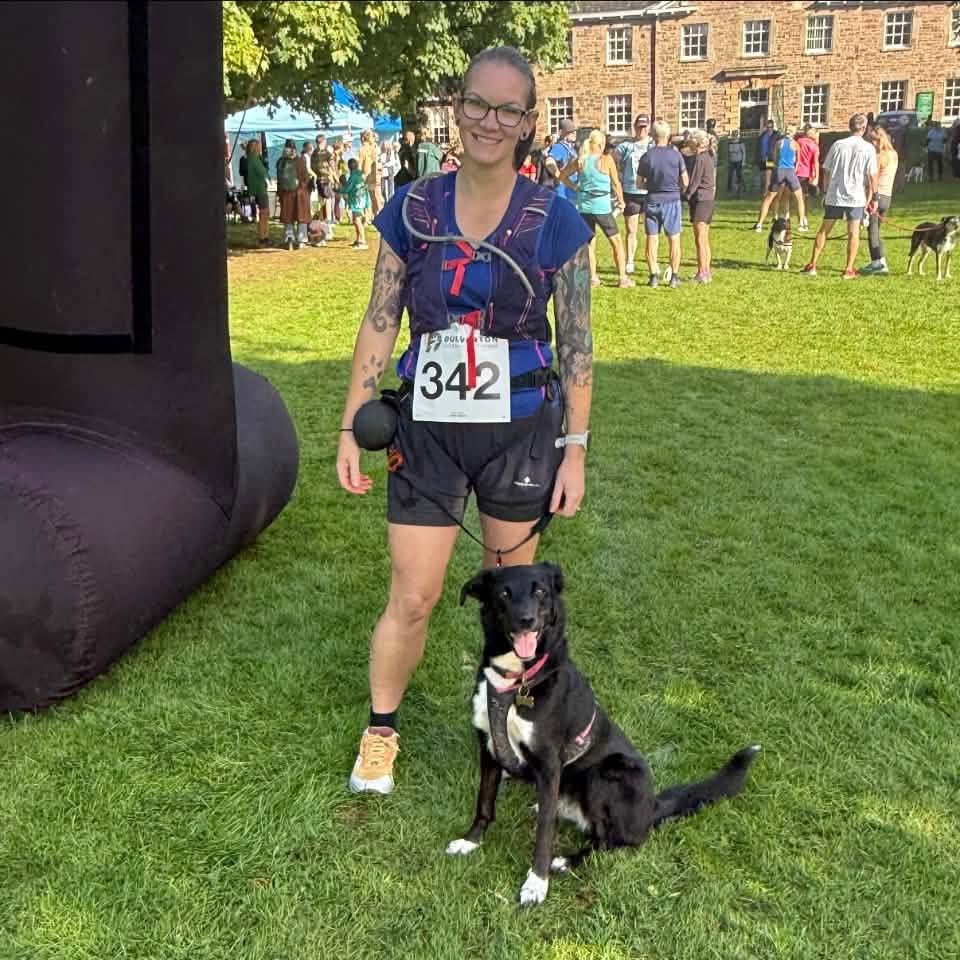
Me and Jess at the Dulverton fun run 10km event last September.